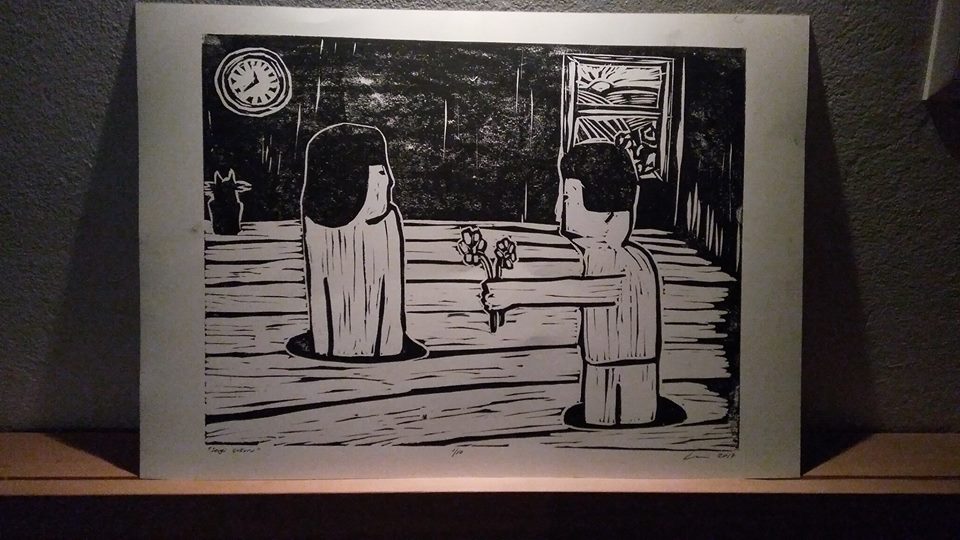
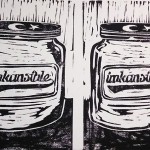
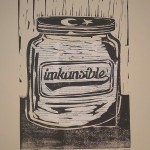
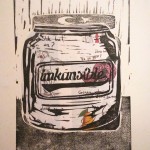
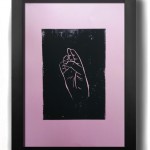
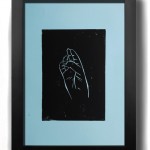
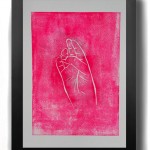
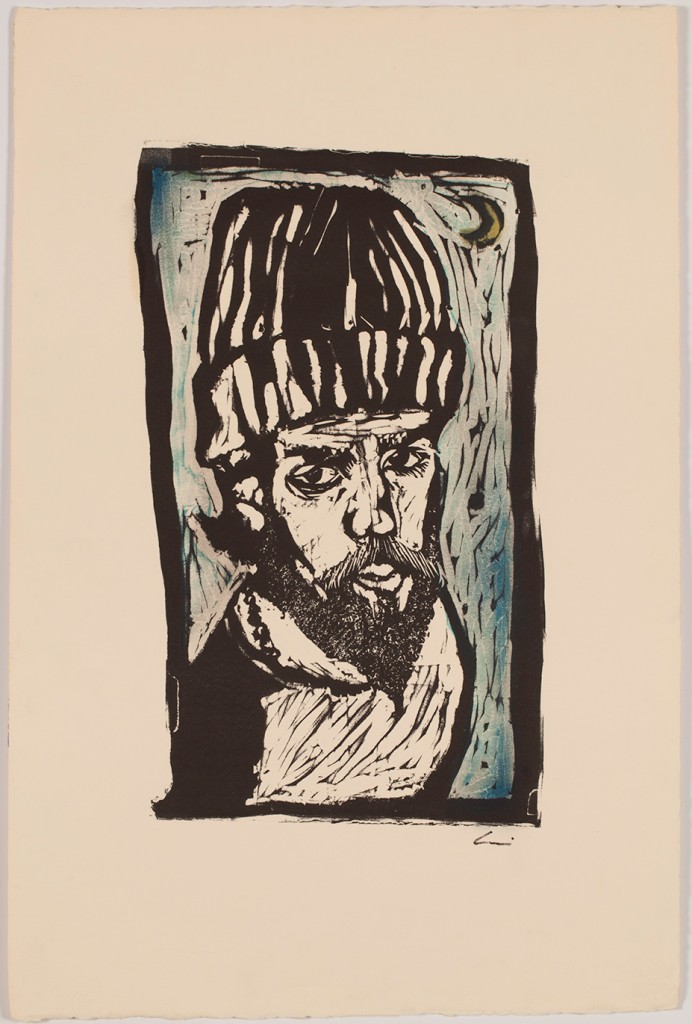
“sevgi çukuru” Ari Alpert – 1/10 linol baskı – 2017

“sevgi çukuru” Ari Alpert – 1/10 linol baskı – 2017

Brick by brick, Guenther Demnig is working to change how the Holocaust is publicly remembered in Germany.
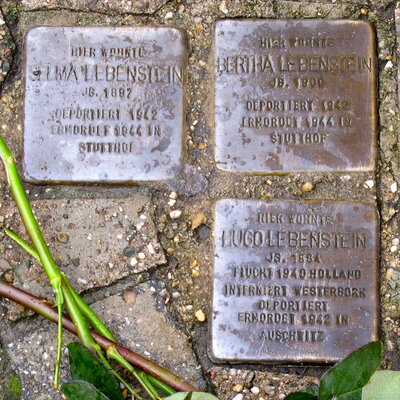
On a recent afternoon, the 62-year-old Berlin-born artist is on his knees on a sidewalk in a prosperous section of Berlin’s Charlottenburg district, working a hammer and small trowel. He is installing dozens of small, square brass bricks, each one inscribed with the name — and details about the death of — people who once lived in apartment houses on Pestalozzi Strasse.
“Today we are laying 45 stones for Jewish victims that lived in these houses,” Demnig says as he secures the brass brick for Martin Lwowski, a former resident deported in 1943 and murdered at Auschwitz.
Wearing a cowboy hat and denim from head to toe, Demnig is watched by a quiet throng, many dressed in their Sunday, or Sabbath, best, out of respect for the dead. He first got the idea for the Stolperstein, or “stumbling stones,” as part of an art project back in the mid-1990s when he installed 55 such commemorative stones in Berlin sidewalks.

Guenther Demnig is the artist and sculptor behind the stumbling stones. Here, he installs new bricks in Berlin. He says formal memorials are too abstract. Not so with the stumbling stones. “Suddenly they are there, right outside your front door, at your feet, in front of you,” he says.

Esme Nicholson/NPR
In the ensuing years, the project has mushroomed. Now, there are more than 30,000 commemorative bricks in dozens of cities and towns across Germany.
A More Personal Memorial
Demnig relies on local residents and schools, as well as religious and secular groups, to research the victims, their last address and where they were killed. He then makes and installs the bricks with help from two apprentices.
This kind of memorial is more personal, he says, because it commemorates where the terror began, likely with a Gestapo or SS raid on a victim’s apartment.
Germans have long anguished over and debated how to best memorialize victims of the Nazi regime: millions of European Jews murdered in the Holocaust as well as political opponents, homosexuals, Roma and disabled people. There are museums and some big memorials, but to Demnig and many others, those are hardly adequate.
“I think the large Holocaust memorial here [in Berlin] will always remain abstract. You have to make the decision to visit it,” Demnig says. “But not with the stumbling blocks. Suddenly they are there, right outside your front door, at your feet, in front of you.”
‘Everyone’ Responsible For Remembering
These latest bricks, which are always privately funded, were organized by 52-year-old Hendrik Czeczatka, who spent part of his childhood in an apartment building on Pestalozzi Strasse where his grandmother lived.
“I grew up right here. I played football in this courtyard. I broke that window right there,” Czeczatka says, pointing, “much to the dismay of my grandmother.”
Just off the street in the courtyard of a 19th century tenement housing block is a synagogue, built in 1918. It survived the Kristallnacht attacks in November 1938, during which Germans torched and ransacked Jewish homes, stores and synagogues.
Czeczatka remembers his grandmother telling him how she instructed the Nazis not to burn the synagogue because Aryans lived in the surrounding apartments. After Czeczatka moved into the family apartment about 15 years ago, he began to research just who lived in his building. He found names of more than 40 Jewish residents who were rounded up and deported to death camps, mostly Theresienstadt.
Before 1933, Charlottenburg had the largest Jewish population in Berlin. Yet Czeczatka was alarmed that so few households in the area had bothered to request Demnig’s bricks. So he started raising money and awareness.
“Everybody in the first place is responsible, individually, for remembering. One can’t pass off everything to the state. And we are the state anyway,” Czeczatka says. “All of us must continue to insist that Nazis are not welcome, that we must keep the memory alive and learn from our history so that it does not happen again.”
Critics: Blocks Victimize Anew
One of the onlookers at the informal, yet emotionally charged and police-protected bricklaying ceremony is Lala Suesskind, former chairman of the synagogue’s committee. Suesskind has come to meet Czeczatka and shake his hand.
“That this is the initiative of a non-Jewish resident and his wife really moves me,” Suesskind says.
The brick project has its critics. Some homeowners elsewhere have complained quietly that having quasi-tombstones in the sidewalk outside is bad for property values and business.
But the main complaints are that the bricks only highlight victimhood, and that when people, dogs and bikes trample over the names of the dead, some argue, they are victimized a second time.
In Munich, city officials and a large influential Jewish group rejected the project. In fact, they banned the bricks after arguing that they desecrated the memory of the victims.
But Helmut Loelhoeffel, coordinator of the Charlottenburg Stumbling Block Initiative, believes those criticisms are misplaced.
“Six million Jews were killed, murdered. The stumbling blocks make clear that it was one plus one plus one plus one,” Loelhoeffel says. “It makes clear that they were all individuals.”
source: npr
http://www.npr.org/2012/05/31/153943491/stumbling-upon-miniature-memorials-to-nazi-victims



I Modi or The Ways was a book of engravings depicting sixteen sexual positions. Think of it as The Joy of Sex for Renaissance times. The book, also known as The Sixteen Pleasures, was published by the engraver Marcantonio Raimondi in 1524. Raimondi based his explicit illustrations on a series of erotic privately owned paintings by Giulio Romano. The book was widely circulated. It led to the first prosecution for pornography by the Catholic church. Raimondi was imprisoned by Pope Clement VII. All copies of the book were destroyed.
Our story doesn’t end there, as the poet and satirist Pietro Aretino heard of the book and wished to see Romano’s original paintings. Interestingly, Romano was not prosecuted by the Pope as his paintings (unlike Raimondi’s book) were not meant for public consumption. Aretino decided to write a series of erotic sonnets to accompany the paintings. He also successfully campaigned to have Raimondi released from prison.
In 1527, a second edition of I Modi was published with Aretino’s sonnets. Once again the Pope banned the book and all copies were destroyed—only a few small fragments of I Modi or Aretino’s Postures survive which are held at the British Museum.
In 1798 a completely new version of I Modi was published in France under the title L’Arétin d’Augustin Carrache ou Recueil de Postures Érotiques, d’Après les Gravures à l’Eau-Forte par cet Artiste Célèbre, Avec le Texte Explicatif des Sujets (The ‘Aretino’ of Agostino Carracci, or a collection of erotic poses, after Carracci’s engravings, by this famous artist, with the explicit texts on the subject) based on engravings by Baroque painter Agostini Carracci was published.
These 18th century engravings mixed classical myth and history within a contemporary setting—though their intention is still the same—to arouse and “educate” users to the joys of sex.

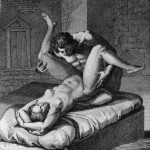
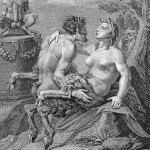
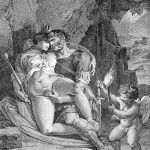
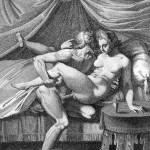
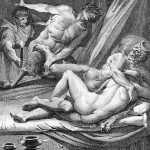
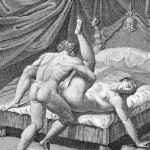
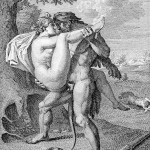
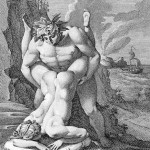
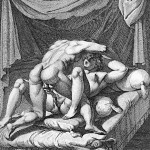
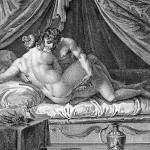
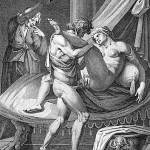
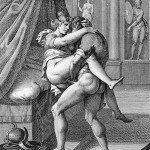
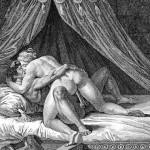
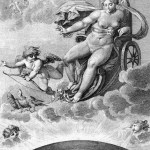
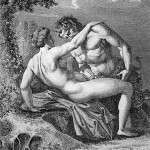
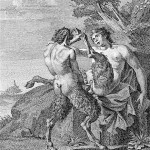
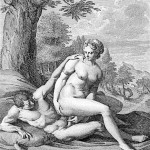
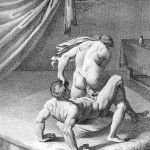
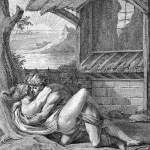
source: http://dangerousminds.net/comments/an_18th_century_guide_to_sex_positions
Details
– Bir adet 10.5×15 cm boyutunda kesilmiş linolyum tabaka
– Linolyum kesme bıçağı
– Üzerine baskı yapılacak kağıt
– Baskı işlemi sırasında kullanılacak tahta kaşık
– Mürekkep
Katılımcılar atölyede seçecekleri hazır görselleri, örnekteki gibi oyma işlemine ve 10.5 x15 cm oranına uygun halde hazırladıkları görselleri ya da marker kalem ile doğrudan linolyum üzerine çizecekleri deseni çalışabilirler.
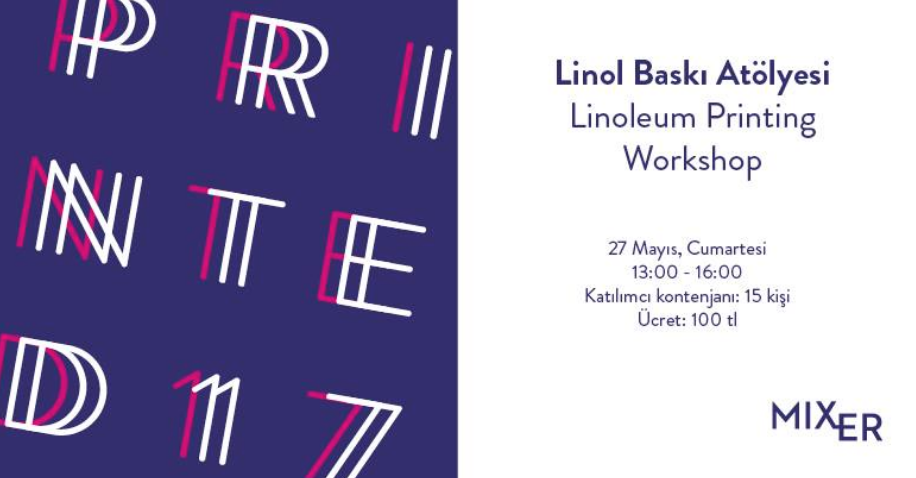
Linol Baskı Atölyesi / Linoleum Printing Workshop
27 Mayıs, Cumartesi
13:00 – 16:00
Katılımcı kontenjanı: 15 kişi
Ücret: 100 tl
Detaylı bilgi ve iletişim için:
info@mixerarts.com
0212 243 54 43
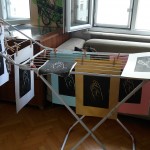
The participants will experience every process and application steps related to the printing stage with Ari Alpert, an engraving artist, after a short briefing about how to choose the design that will be printed and the related preparations in our workshop. They will also have the chance to make little unique gravures for themselves or their loved ones!
Graving, originally a French word ”gravure” and also a technique found in printing, can also refer to artistic engravings or etchings. Linoleum is a floor covering made from renewable materials such as solidified linseed oil (linoxyn), pine rosin, ground cork dust and wood flour. In the Linoleum printing technique (Linocut), the desired design is cut with a sharp knife and fitted on a sheet of linoleum, then it’s painted with printing ink and the help of a brayer (also called a roller). During the printing phase, raised parts to pass on to the paper, creating a mirror image of the engravings. So it’s imperative that we base our engravings on the negative form of our desired designs.
The necessary materials for the linoleum printing technique will be prepared for every participant.
– A sheet of Linoleum in 10.5x15cm dimensions
– A printing paper
– A sharp knife for cutting Linoleum
Linoleum Printing Workshop
May 27, Saturday
13:00 – 16:00
The workshop is limited to 15 people.
Fee: 100 tl
For more information and reservation:
info@mixerarts.com
0212 243 54 43

SATURDAY (06/05/2017) Machine Club
OSMAN PRODUCTIONS GURURLA SUNAR:
Remember (Feat. Şenceylik) Release Party!
Smitech Wesson (Boxon Records, Vital Fm, O.P)
Disc Jockey Ari (O.P)

Osman Productions:
OSMAN PRODUCTIONS ilk adımlarını 2000’li yıllarda, uzun ve ince yollarda atmaya başladı… Yürüdükçe büyüdü, çeşitlendi, kalabalıklaştı.
Osman, aslında bir isim ve OSMAN PRODUCTIONS için de bir takma isim. Fakat öyle ki sokaktaki boyacıdan, meclisteki milletvekiline kadar her yerde duyulabilen, rastlanabilen bir isim… Tam burada OSMAN bir duruma da karşılık geliyor. Takma isim olmaktan çok her yere sızabilen, her yerde olabilen bir gülünç beceriksizlik, şaşkın ve dehşet içinde ama serin bakışlarla tanığı olduğu sahnelerin içinde süzülen bir hayali kimlik gibi…
Osman ismine rastlanabilen anların çeşitliliği gibi OSMAN PRODUCTIONS da ana akımdan, alt kültürden, aralardan ve derelerden geçen, hayallerden, gerçeklerden, müzikten ve her türlü imgeden, sokak sanatı, iğne oyası, tığ işi gibi pek çok çeşitte alandan beslenen ve tüm bu alanlarda etkin üretimine devam eden, herkesi de üretime ve devam etmeye teşvik eden bir oluşum.

This article originally appeared on VICE UK
You can tell a lot about a country based on who runs it. Almost five months after he stepped down from his role as Prime Minister, you might for a second forget that David Cameron isn’t still running the UK. He’s come to define the last few years of austerity Britain, of a Tory party that champions spending cuts and slashed benefits for the young, while making jokes about how the leader of the opposition does up his tie and sings the national anthem. Gordon Brown symbolizes a sort of sad-faced dejection; Blair an optimism that later soured beyond belief and turned his name into a leftie slur, and Thatcher the crushing blow to industry that shook Britain to its core—or “power dressing” if you’re a women’s magazine.
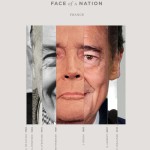
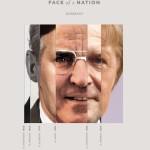
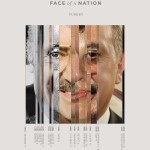
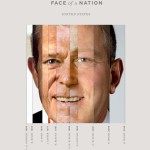
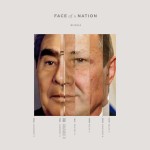
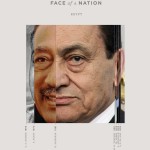
But how much of that could you really learn from just looking at a photo of the prime minister? For Amsterdam-based artist Guney Soykan, one simple concept helps to chart the changing face of leadership in a handful of countries, displayed in his Face of a Nation project. And it all started with Guney’s birthplace, in Turkey.
“The election results on November 1, 2015 were a big surprise for the opposition,” he says. “Besides all of the controversy surrounding the government’s actions, Erdogan and his AK Party had won the election again—by a major landslide. I was trying to understand the reasons behind the results. One of the things I realized was that voting behavior is very emotional: The elected leaders are a reflection of their society. And to me, that reflection is not only about the ideas, but also about the personality of the leader. I believe that people tend to vote for leaders with whom they can identify.”
So he decided to bring together a visual record of the people chosen to run their countries—however democratically—over the past 50 years, creating a sort of time-lapse composite photo of one face made up of slivers of all the former leaders. The results vary, from the tiny splinters of men in Turkey’s tumultuous political atmosphere to the creepy continuity of North Korea.
“It was almost too easy to put together the faces of the North Korean leaders. There are only three, and they’re all part of the same family lineage,” he says. “But when searching for images to use, I noticed something else that tells us about the political communication in North Korea—the most popular portraits of these leaders are almost identical. They all portray the men from the same angle, wearing the same glasses, and with a very similar haircut. North Korean propaganda leaves no room for doubt that the ideology of their first leader Kim Il-sung continues throughout his successors.”
Other countries had their own tropes. “The official presidential photos released by the White House are always the same—facing to the right and smiling at camera,” he says. “Meanwhile, Russian leaders have always been portrayed in a very serious and powerful pose.” In South Africa, you watch as the majority black country moves from being run by the white-minority, racist apartheid government, to the post-independence ANC party.
What about countries he hasn’t featured? The places that don’t tend to come up in the usual global conversations around the G-8 or G-20 countries? “I think everyone is more or less aware of what is going on near their country. So even if your neighbors aren’t among these global political ‘superstars,’ you will still know about their political leaders. And the actions of these political players will play a role in your perception of that country.”
Ultimately, the project is a reflection on history. You can follow the homogeneity of most country’s leaders—mostly male, generally of one specific ethnic group—and ask yourself what that tells you about the rest of that nation’s citizens. Guney just pulled these images off the internet, so understands this is less a photographic piece than one about perception. For him, Turkey tells the most compelling tale, and sheds light on recent electoral upsets we’ve witnessed in both the US and UK this year.